
Curriculum and Program Formats
The formats below are built for the MEMa Studio, our mobile production truck, now in development. It will bring the full program to schools, festivals and events across the country.
-
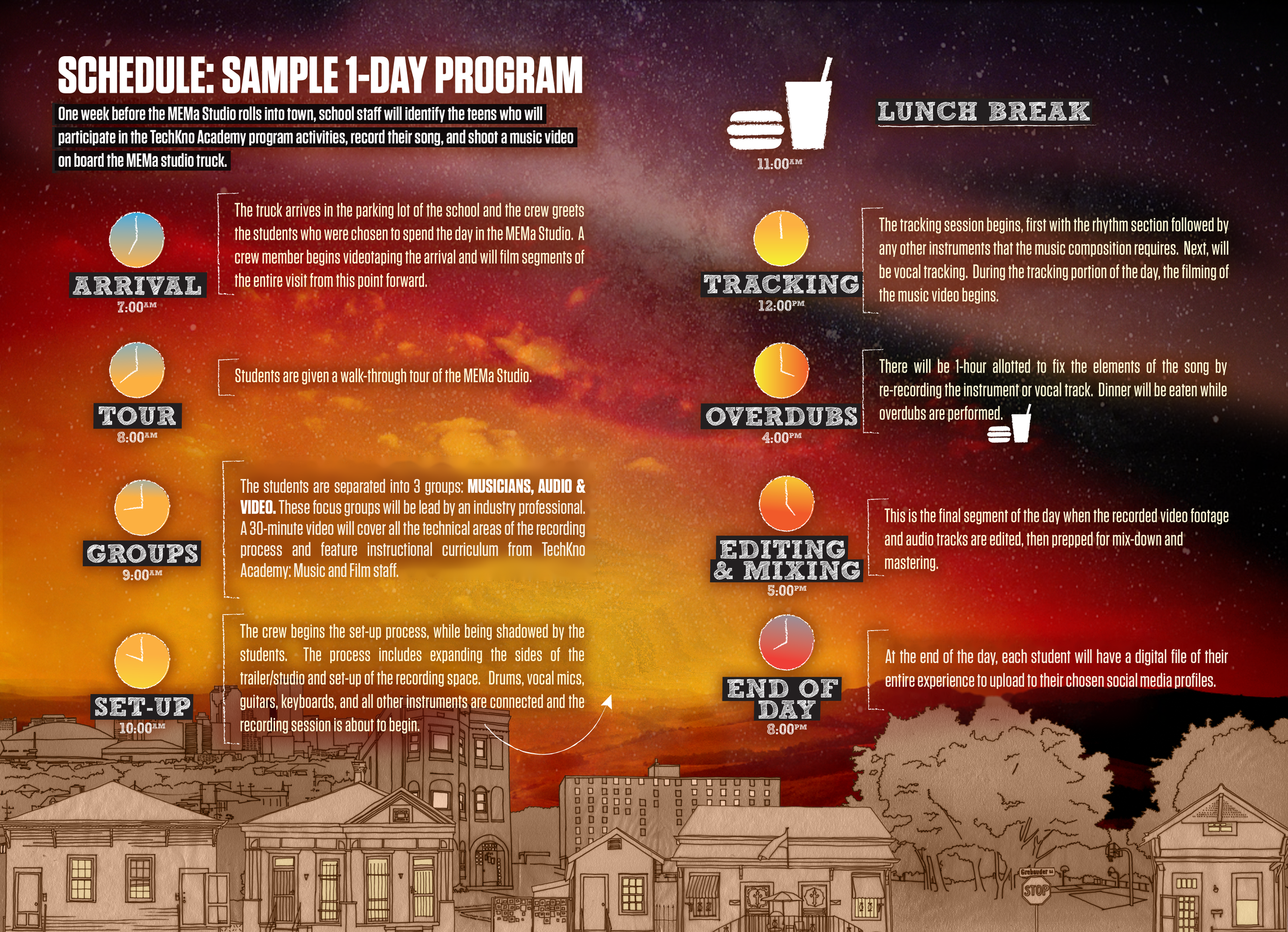
1-Day
One day, start to finish. Students arrive in the morning and leave that night with a finished piece they wrote, recorded, shot and edited themselves. Files in hand.
It is a thirteen-hour day. That is what carrying a project from nothing to finished actually takes, and it is the reason students remember it.
The Film Sound Design track works differently. Students choose a film they love and we strip out the audio. A spotting session comes first: one pass through the film to decide, moment by moment, what sound has to do. Then they rebuild it from silence: dialogue, foley, effects, score, using the same workflows as commercial post houses.
-
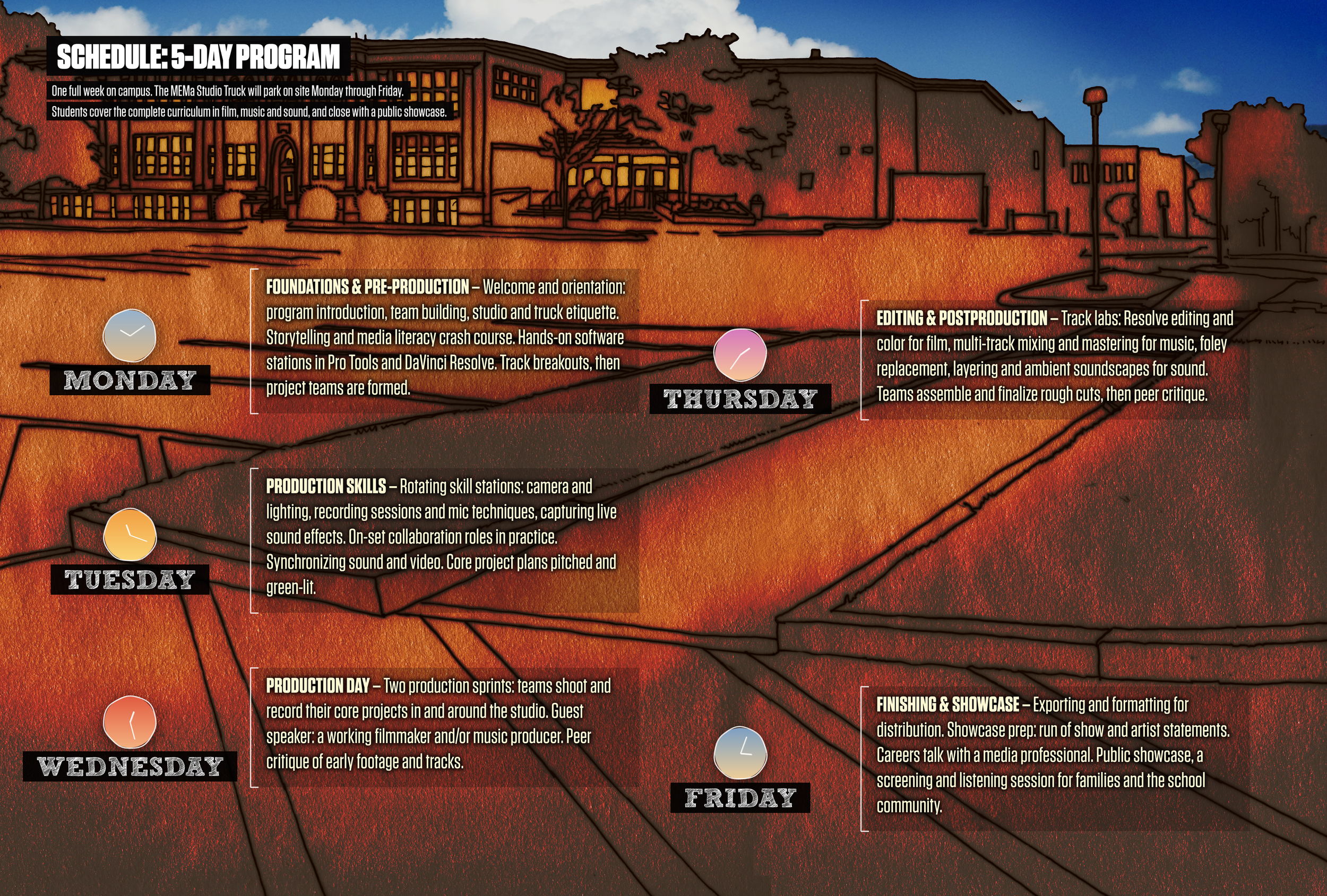
5-Day
Five days on site, Monday through Friday. The extra time changes the work: students develop a real script, shoot with proper coverage, and edit with room to revise rather than just finish. The week ends with a public showcase for families and the community.
The Film Sound Design track begins at the spotting session: the class watches the scene together and builds a cue list, naming every place sound is missing. That list becomes the plan for the week. From there each student works at their own station with individual instruction, carrying the scene from silent footage to a finished mix, with foley, ADR and ambience along the way.
-
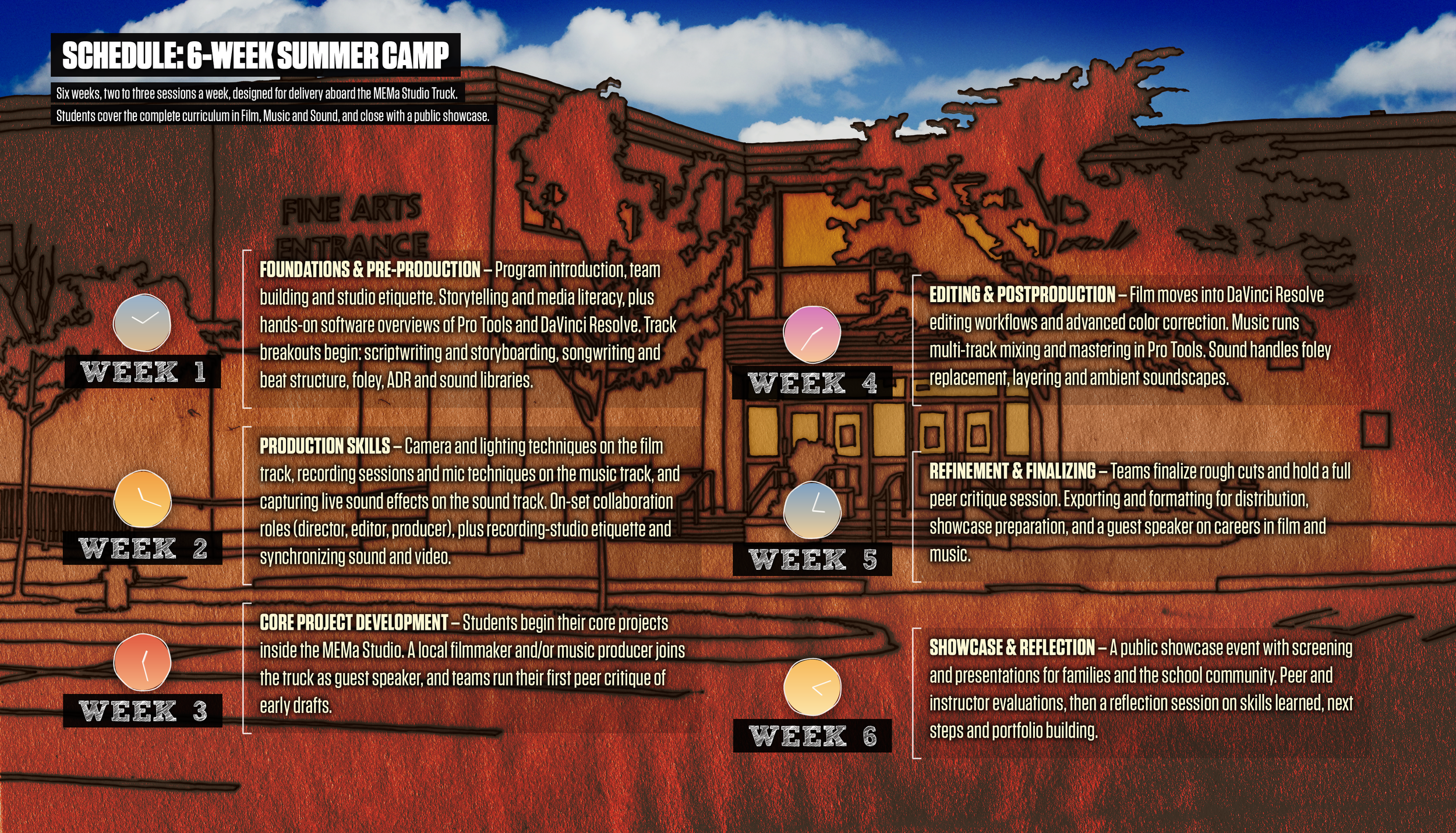
6-Week Summer Camp
Six weeks, two to three sessions a week. The full curriculum, at a pace that lets ideas develop. Concept and script first, then production, then post, with peer critique between each stage. A working filmmaker or music producer joins partway through. The camp closes with a public screening.
The Film Sound Design track runs in parallel and opens with a spotting session: the class watches the picture together and argues out what each scene is asking for before anyone touches a fader. Six weeks then gives them room to build genuine fluency in Pro Tools across foley, ADR, layering, ambient soundscapes and mastering.
-
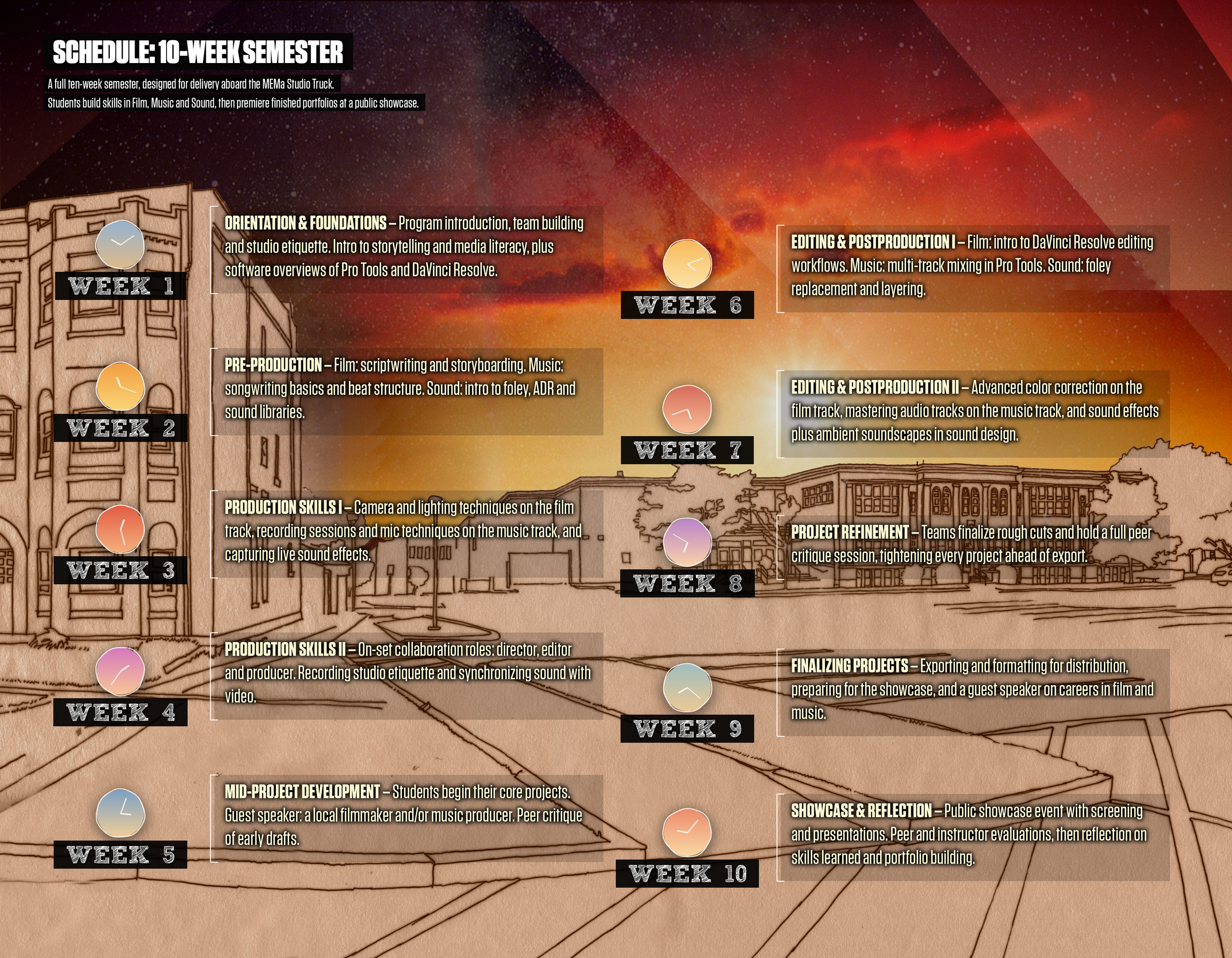
10-Week Semester
Our full academic term, and the format running in Chicago schools today. Ten weeks gives students what the shorter formats cannot: time to get it wrong, take the critique, and do it again. Teams work across film, music and sound on a professional production schedule and finish with a portfolio piece, premiered at an end-of-semester showcase.
The Film Sound Design track follows the same arc. It begins where professional post begins: a spotting session, the pass where a sound team watches picture and decides what every scene needs before building anything. From there: microphone technique, foley, dialogue editing, sound effects and mastering, each student at a dedicated station throughout.